
The Settlers Series: A Comprehensive Overview
Introduction
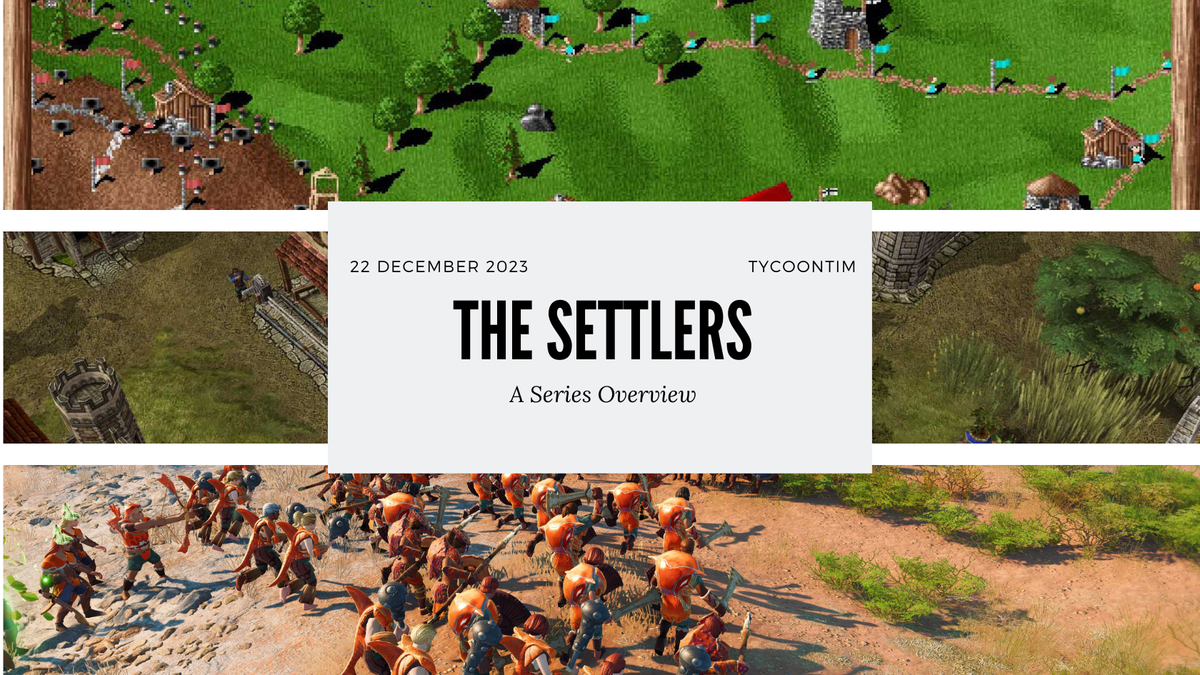
The Settlers is a renowned and enduring real-time strategy (RTS) game series that has captivated players since its inception in 1993. Developed by Blue Byte Software, now a subsidiary of Ubisoft, the Settlers series has evolved over the years, providing players with a unique blend of resource management, city-building, and strategic warfare. This overview delves into the rich history of the Settlers franchise, tracing its roots, exploring the core gameplay mechanics, and highlighting the major releases that have contributed to its enduring popularity.
Genesis of The Settlers
The Settlers (1993)
The inaugural title, simply titled "The Settlers," was released in 1993 for the Commodore Amiga platform. Created by Volker Wertich, the game introduced players to a charming medieval world where they assumed the role of a leader tasked with establishing and expanding a settlement. Its distinctive feature was the intricate economy system, requiring players to manage resources like wood, stone, and food to ensure the prosperity of their burgeoning community.
Expansion and Adaptation
Building on the success of the first installment, Blue Byte expanded the series across various platforms, including MS-DOS and the Atari ST. The game's appeal lay in its meticulous attention to detail, as settlers dynamically engaged in tasks like mining, farming, and trading, creating a living, breathing environment.
Evolution of Gameplay Mechanics
The Settlers II (1996)
The second installment, "The Settlers II: Veni, Vidi, Vici," released in 1996, marked a significant evolution in gameplay. Retaining the core resource management and settlement-building elements, Settlers II introduced a more polished and visually appealing isometric view. The addition of military campaigns heightened the strategic depth, allowing players to engage in territorial conquest.
Innovations in Economic Simulation in The Settlers III (1998)
As the series progressed, Blue Byte continued to refine the economic simulation aspects. The Settlers III (1998) brought about a 3D environment, enhancing both the visual aesthetics and gameplay dynamics. The game's focus on a modular building system, where structures interconnected to optimize efficiency, became a hallmark of the series.
Settlers Heritage of Kings (2005)
With "The Settlers: Heritage of Kings," the franchise took a bold step by adopting a fully 3D engine for the first time. Released in 2005, this installment expanded the narrative, introducing a more complex storyline and featuring hero characters with unique abilities. Despite these innovations, it faced mixed reviews from fans who were divided over the departure from the traditional gameplay style.
Iterative Improvements and Expansions
The Settlers: Rise of an Empire (2007)
"The Settlers: Rise of an Empire" aimed to refine and build upon the foundations laid by its predecessors. Released in 2007, the game featured an extensive single-player campaign, introducing varied mission objectives and scenarios. The inclusion of a day-night cycle added a layer of realism to the game, affecting resource production and unit behavior.
The Settlers 7: Paths to a Kingdom (2010)
"The Settlers 7: Paths to a Kingdom" embraced online multiplayer, a significant departure for the series. Released in 2010, it introduced a persistent online world where players could compete against each other, vie for resources, and engage in strategic warfare. This shift towards a more multiplayer-focused experience received mixed reactions, with some appreciating the innovation and others yearning for the classic single-player experience.
The Settlers Online (2010)
Ubisoft decided to try and get a slice of the MMO market using The Settlers, one of their most renowned brands. In this browser based MMO, you build your own settlement, as you do in the other games in the series. You can buy in-game currencies using real money to speed things up, but as far as I have seen that is not needed to play.
Challenges and Reboots
The Settlers (2023)
Amidst the changing landscape of the gaming industry, Blue Byte announced a reboot of The Settlers series in 2018. However, the journey to revitalize the franchise faced delays and challenges, with the official release of the rebooted "The Settlers" finally occurring in 2022.
This modern iteration aimed to blend the classic Settlers experience with contemporary visuals and gameplay mechanics. With a renewed focus on player accessibility, it sought to attract both longtime fans and a new generation of gamers. The game featured a dynamic world, improved graphics, and a return to the roots of the series in terms of resource management and settlement-building.
Legacy and Impact
Enduring Popularity
The Settlers series has left an indelible mark on the RTS genre, earning a dedicated fanbase over the years. Its unique blend of meticulous economic simulation, engaging city-building, and strategic warfare has set it apart from other titles in the genre.
Cultural Impact
The charming aesthetic of The Settlers, coupled with its immersive gameplay, has contributed to its cultural impact. The series has inspired fan communities, mods, and even academic discussions on game design and economic simulation within the gaming industry.
Conclusion
The Settlers series has undergone a remarkable evolution since its humble beginnings in 1993. From pioneering economic simulation mechanics to embracing 3D graphics and online multiplayer, the franchise has continually adapted to the changing landscape of the gaming industry. The reboot in 2022 aimed to recapture the essence of the original while introducing modern elements to appeal to a contemporary audience.
As The Settlers continues to shape the city-building and RTS genre, its legacy endures through its dedicated fanbase, cultural impact, and the ongoing quest to balance tradition with innovation in each new installment.